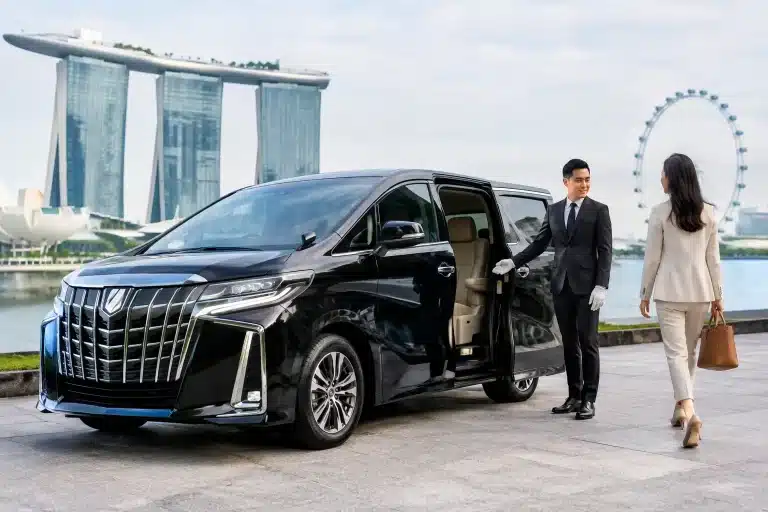
A late-night arrival at Changi, two children half asleep, several large suitcases and a fixed hotel check-in time is not the moment to leave transport to chance. When asking what makes an LTA-licensed chauffeur different? Safety checklist questions should come before the booking is confirmed – especially when you are travelling with family, colleagues, elderly relatives or a larger group.
The difference is not simply a smarter vehicle or someone holding a sign at the arrival hall. A professional, properly authorised chauffeur service is built around legal operating requirements, safe driving habits, suitable vehicles and clear accountability. Those details make a practical difference when a journey has luggage, a flight delay, a wedding schedule or an important business appointment attached to it.
What an LTA-licensed chauffeur should mean
In everyday conversation, people often use “LTA-licensed chauffeur” to describe a professional private-hire or limousine driver. The exact vocational licence or operating requirement can depend on the vehicle type and service provided. A private-hire car, maxi cab and minibus may not all fall under the identical licensing category.
That distinction is worth understanding. The useful question is not whether a provider uses a broad marketing label, but whether the driver and vehicle are properly authorised and suitable for the journey being booked. A responsible operator should be able to confirm this clearly, along with the passenger capacity, luggage allowance and pickup arrangement.
A licensed professional driver works within a regulated transport environment. This brings an expectation of valid credentials, roadworthiness standards, insurance arrangements and responsible conduct on the road. It does not mean every ride will be identical, but it gives passengers a clearer standard to look for and a provider who can be held accountable.
For airport transfers, family outings and corporate travel, that accountability matters. You are placing people, belongings and timing in someone else’s hands.
The safety checklist before you book
A good safety check does not need to be complicated. It should help you establish whether the transport provider is prepared, transparent and attentive to the details that affect your trip.
- Confirm the right vehicle size. Passenger seats are only one part of the calculation. State how many adults, children, bags, prams, golf bags or bulky items are travelling. A 6-seater Alphard may be ideal for a family with moderate luggage, while a 7-seater maxi cab, Mercedes V-Class or 13-seater minibus may give a group more breathing room.
- Ask who is driving and how the pickup works. You should receive a clear pickup time, location and contact method. For airport arrivals, ask how flight changes are handled and where the chauffeur will meet you. Clear instructions prevent tired travellers from wandering between pickup points with heavy bags.
- Check that safety equipment suits your group. If you need child seats, extra assistance for an elderly passenger or space for a foldable wheelchair, raise it during booking. Do not assume every vehicle carries the same equipment or has the same boot configuration.
- Look for a maintained, presentable vehicle. A clean cabin is reassuring, but the more important point is that the vehicle is regularly serviced, roadworthy and appropriate for passenger use. If you are booking for an event, ask for the vehicle model rather than relying on a generic photograph.
- Use a provider with a responsive contact channel. Travel plans change. A service that answers WhatsApp messages promptly and confirms updates gives you a direct route to resolve a delayed flight, revised pickup point or added luggage requirement.
- Make sure the price and service scope are clear. Know whether the booking is a direct transfer, hourly charter or event transport arrangement. Confirm waiting time, additional stops, late-night requirements and any special requests before the journey. Clear terms reduce avoidable stress for both passenger and chauffeur.
What professional chauffeur behaviour looks like on the road
Licence status is a starting point, not the complete passenger experience. A capable chauffeur combines safe driving with calm, useful service.
You should expect sensible speed, smooth braking, proper lane discipline and patience in congested traffic. These basics are particularly noticeable when children are seated in the rear, when a passenger is prone to motion sickness or when formalwear and delicate event items are being transported. A rushed ride can make even a short journey uncomfortable.
Professionalism also shows in smaller actions. The chauffeur arrives with enough time to load luggage safely, checks the destination where necessary, assists passengers in and out of the vehicle, and keeps communication simple. For airport pickups, they monitor the agreed arrival details rather than treating a delayed flight as the passenger’s problem alone.
There is a balance to strike. Some travellers want conversation and local recommendations; others need a quiet ride after a long flight or before a meeting. A good chauffeur reads the situation, remains courteous and lets the passenger set the tone.
Why vehicle suitability is part of safety
A vehicle can be legal to operate and still be a poor match for your group. Overloading a boot, squeezing passengers into unsuitable seating or attempting to manage oversized items in a small car creates unnecessary risk and discomfort.
This is where booking a specialist transport service is useful. A couple travelling with cabin bags may prefer a Mercedes E-Class. Business guests or wedding passengers may value the additional refinement of an S-Class. Families and small groups often need the flexible seating and luggage room of an Alphard or V-Class. For larger parties, a 13-seater standard or VIP minibus offers a more practical solution than splitting people across several vehicles.
The right choice depends on the number of people, the amount of luggage and the nature of the trip. For example, six passengers with six large suitcases may need more space than a vehicle marketed simply as a six-seater can comfortably provide. Give accurate information at the outset and allow the transport team to recommend the sensible option.
What makes an LTA-licensed chauffeur different for group travel
Group transport has more moving parts than an individual ride. There are multiple pickup times, guests who may not know the area, luggage that arrives separately and schedules that cannot slip. A professional chauffeur service should reduce those moving parts rather than add to them.
For a wedding, the chauffeur needs to understand the order of pickups, waiting periods and venue access. For a company outing, the focus may be on punctual departure and keeping the group together. For a party booking, it may be late finishing times and a safe, organised journey home. In each case, advance planning is a safety measure as much as a convenience.
It also helps to use one point of contact. Rather than asking passengers to chase several drivers, the organiser can confirm the journey with the booking team and share one clear set of instructions. This is particularly valuable when plans change at short notice.
Questions worth asking before confirmation
Before paying for a booking, ask whether the stated vehicle can accommodate your passengers and luggage comfortably, how the chauffeur will contact you, and what happens if your arrival time changes. If it is an hourly charter, clarify the start time, end time and planned route. If you need a child seat or mobility support, confirm availability in writing.
You can also ask whether the driver and vehicle meet the relevant requirements for the service. A credible provider will answer directly rather than avoiding the question. Be cautious of vague promises, unusually incomplete booking details or a reluctance to provide a vehicle type and pickup plan.
At MyMaxiCabSGP, the aim is to make these decisions straightforward: choose a suitable vehicle, share your journey details and receive a clear confirmation through a responsive booking channel. That approach is especially helpful when timing, luggage space and passenger comfort all matter at once.
A safe journey begins well before the chauffeur opens the door. Choose a service that listens to the details of your trip, assigns a vehicle that genuinely fits, and gives you a clear person to contact when plans move. That is the kind of reassurance travellers remember long after the bags are unpacked.