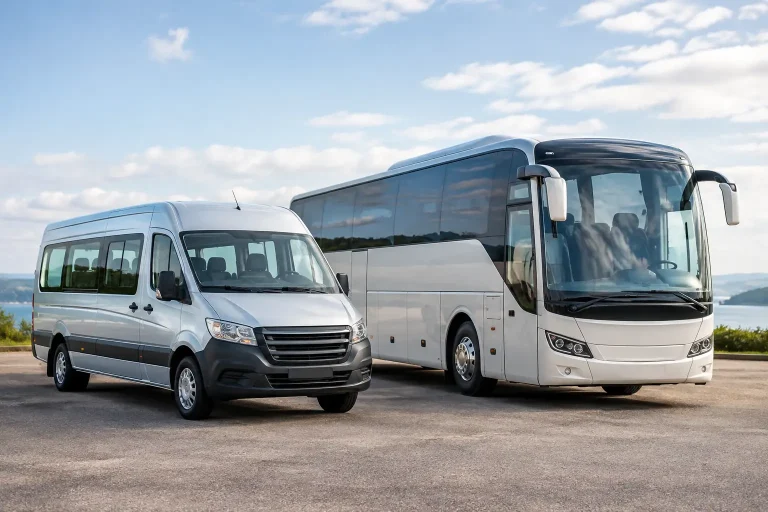
A group arriving at Changi with suitcases, pushchairs and a flight to recover from does not need the biggest vehicle available. It needs the right one waiting at the right time. When comparing minibus versus coach hire, the best choice comes down to your passenger count, luggage, route, waiting time and how much flexibility the day requires.
For many families, corporate teams and event organisers, a minibus is the practical middle ground: spacious enough to keep everyone together, but compact enough for hotel driveways, residential pick-ups and multiple stops. A coach makes more sense when the group is genuinely large and moving together on a straightforward schedule. Choosing well avoids paying for empty seats or, worse, finding that people or bags do not fit comfortably.
Minibus versus coach hire: the key difference
A minibus is built for small to medium-sized groups. In Singapore, this commonly means a vehicle for around 10 to 13 passengers, depending on the seating layout and operator. It is a popular choice for airport transfers, weddings, family gatherings, business outings and point-to-point group journeys.
A coach is designed for larger groups, often from around 20 passengers upwards. It offers far more seats and can be efficient for school outings, conventions, staff transport, sightseeing groups and large wedding parties. However, its size can make it less suitable for narrow access roads, smaller pick-up points or itineraries with frequent short stops.
The question is not simply, “How many people are travelling?” Ask instead: “How many people, how much luggage, and what will the journey actually involve?” Those details determine whether a minibus or coach feels easy rather than cramped or excessive.
When a minibus is the better choice
A minibus works particularly well when your group wants private transport without the scale of a full coach. A 13-seater vehicle can keep a family, a group of colleagues or wedding guests together while giving the driver more flexibility around Singapore’s hotels, condominiums, restaurants and event venues.
Airport transfers with luggage
Airport transport is where vehicle capacity can be misleading. Thirteen passengers travelling light may fit in a 13-seater minibus, but thirteen passengers with large check-in cases, cabin bags and a pushchair may need a different arrangement. For a comfortable airport pick-up, share the number of passengers and the likely luggage count when booking.
Smaller groups may also be better served by a 6-seater Alphard or Vellfire, Mercedes V-Class, or 7-seater maxi cab. These options can be more comfortable than booking a minibus with many unused seats, especially for executive travellers or families who prefer a more private ride.
Weddings, celebrations and evenings out
For a wedding party, birthday dinner or night out, a minibus gives everyone the benefit of arriving together. There is no need to coordinate several cars, wait for late-arriving taxis or worry about guests finding the venue. It is also easier to arrange a return journey at a set time, particularly when the group includes elderly relatives or guests unfamiliar with the area.
A minibus is usually the more sensible option if the group will be collected from several nearby locations, travelling between a ceremony and reception, or making a short series of stops. It offers the group experience without the operational limits of a larger coach.
Business and visitor transport
A visiting team often needs more than a ride from A to B. They may have luggage after a flight, a tight meeting schedule and a preference for travelling together rather than splitting across taxis. A minibus provides a professional, organised solution for transfers between the airport, hotel, office and event venue.
For groups of fewer than 13, it can also reduce delays at busy pick-up areas. One pre-booked vehicle, a confirmed collection point and a driver who knows the itinerary can make a busy arrival day much calmer.
When coach hire is worth it
Coach hire becomes the stronger option when the group size is too large for one or two minibuses. If you are moving a sizeable group to one destination on one timetable, a coach can be more efficient than managing several smaller vehicles.
It is often suitable for corporate functions, large-scale tours, school groups and events where everyone starts and finishes at the same locations. A coach may also have more dedicated storage capacity for luggage, depending on the vehicle type, which is helpful for larger travelling groups.
There are trade-offs. Coaches need more room to turn, park and wait. Not every hotel entrance, private estate or restaurant frontage can accommodate one easily. If your plan includes multiple pick-ups, small side roads or a venue with limited vehicle access, check the practical arrangements before confirming the booking.
A coach can also be less economical for a group that is only slightly above minibus capacity. In that situation, two minibuses may offer easier pick-up arrangements and more flexibility, particularly if passengers are starting from different parts of Singapore.
Capacity is only one part of the decision
The most common booking mistake is treating seat count as the whole answer. A vehicle may legally seat the group, but that does not automatically mean it will be pleasant for the journey.
Consider luggage first. Airport passengers carrying large cases need storage room, and bulky items such as golf bags, exhibition materials or folded wheelchairs should always be declared in advance. If space is tight, arranging an additional vehicle can be far more comfortable than trying to fit everything into a full minibus.
Then consider passenger needs. Young children may require child seats, elderly travellers may need easier access, and corporate guests may prefer more personal space. For a longer charter or an important client transfer, comfort can matter more than maximising every seat.
Finally, look at the route. A direct airport-to-hotel journey is different from a five-hour charter with several locations, meal stops and venue waiting time. The longer and more complex the schedule, the more useful it is to discuss it clearly before booking.
A simple way to choose the right vehicle
Start with a complete headcount, including children. Then note the number of large and cabin bags, any bulky items, all pick-up and drop-off points, and whether the group needs a one-way transfer, return trip or hourly charter.
For a small family or executive party, a 6-seater or 7-seater option may offer the best balance of space and comfort. For a group of up to 13, a standard or VIP minibus can keep everyone together. For a much larger group travelling on the same timetable, coach hire is likely to be the more practical choice.
If the numbers are close, do not guess. A responsive transport provider should be able to recommend a suitable vehicle once they know the passenger count, luggage and schedule. This is especially useful for airport arrivals, where a delayed flight, extra bags or unclear meeting arrangements can create unnecessary stress.
Booking details that prevent last-minute problems
The best group transport bookings are specific. Provide the flight number for airport collection, the collection time, the destination, contact number and expected luggage. For events, include the venue access point, planned waiting time and any changes of location.
It also helps to confirm whether your group needs a meet-and-greet arrangement, multiple pick-ups, child seats or assistance with bulky items. Clear information allows the right vehicle and driver plan to be arranged from the start.
MyMaxiCabSGP supports advance and on-demand bookings with straightforward WhatsApp communication, making it easier to confirm the practical details before travel day. For airport transfers and time-sensitive occasions, booking ahead gives your group a clear plan instead of relying on vehicle availability at the last minute.
The right vehicle should make the journey feel settled from the moment your group steps out of the terminal, hotel or venue. Share the full travel plan early, choose for comfort as well as capacity, and let the transport arrangement take one job off your list.


